SEO for Car Dealer Websites: What Actually Sells Cars
If you own a dealership, you probably get constant emails promising first-page Google rankings. Most of them sound impressive, but very few explain how a real buyer ends up walking onto your lot on a Saturday morning.
DealerAssist Team
July 14, 2026
If you own a dealership, you probably get constant emails promising first-page Google rankings.
Most of them sound impressive, but very few explain how a real buyer ends up walking onto your lot on a Saturday morning.
That's because most SEO advice isn't built for car dealers. It's written for blogs, national brands, or companies that sell attention instead of cars. The truth is simple. Dealers waste money trying to beat the entire internet. You don't need to beat the internet. You need to be the obvious choice in your own market.
If someone in your city searches for a car you sell, Google should think of you first. This guide covers how to make that happen, and how the right website setup does most of that work automatically.
The Map Is Your Real Front Door
For car dealers, Google Maps matters more than blue links.
When someone searches for a dealership, Google shows a Map Pack at the top of the page. It usually shows three dealers. Those three get the calls, the directions, and the walk-ins.
Winning those spots isn't about tricks or shortcuts. Consistency and regular activity get you there.
Google favors businesses that look alive.
That starts with accurate hours, real photos, and recent engagement. It also depends on your website supporting your location clearly. A strong dealer website makes a few things obvious at a glance: where you are, how to reach you by phone, and that someone is actually behind the counter right now. When your site structure is simple and your location is clear on the homepage, Google connects your website to your map listing faster. A fast-launch site with built-in local signals helps you show up sooner instead of waiting weeks for SEO fixes after launch.
Your Inventory Pages Do the Heavy Lifting
Every car on your website is a chance to show up in search results.
Most buyers do not search for “used cars.” They search for specifics. Make, model, year, price range, and features. Inventory pages are where SEO actually turns into sales.
If those pages are thin or slow, Google skips them and buyers leave.
Strong inventory pages share a few traits:
- Clean URLs and clear titles
- Real vehicle details, not placeholders
- Fast load times on mobile
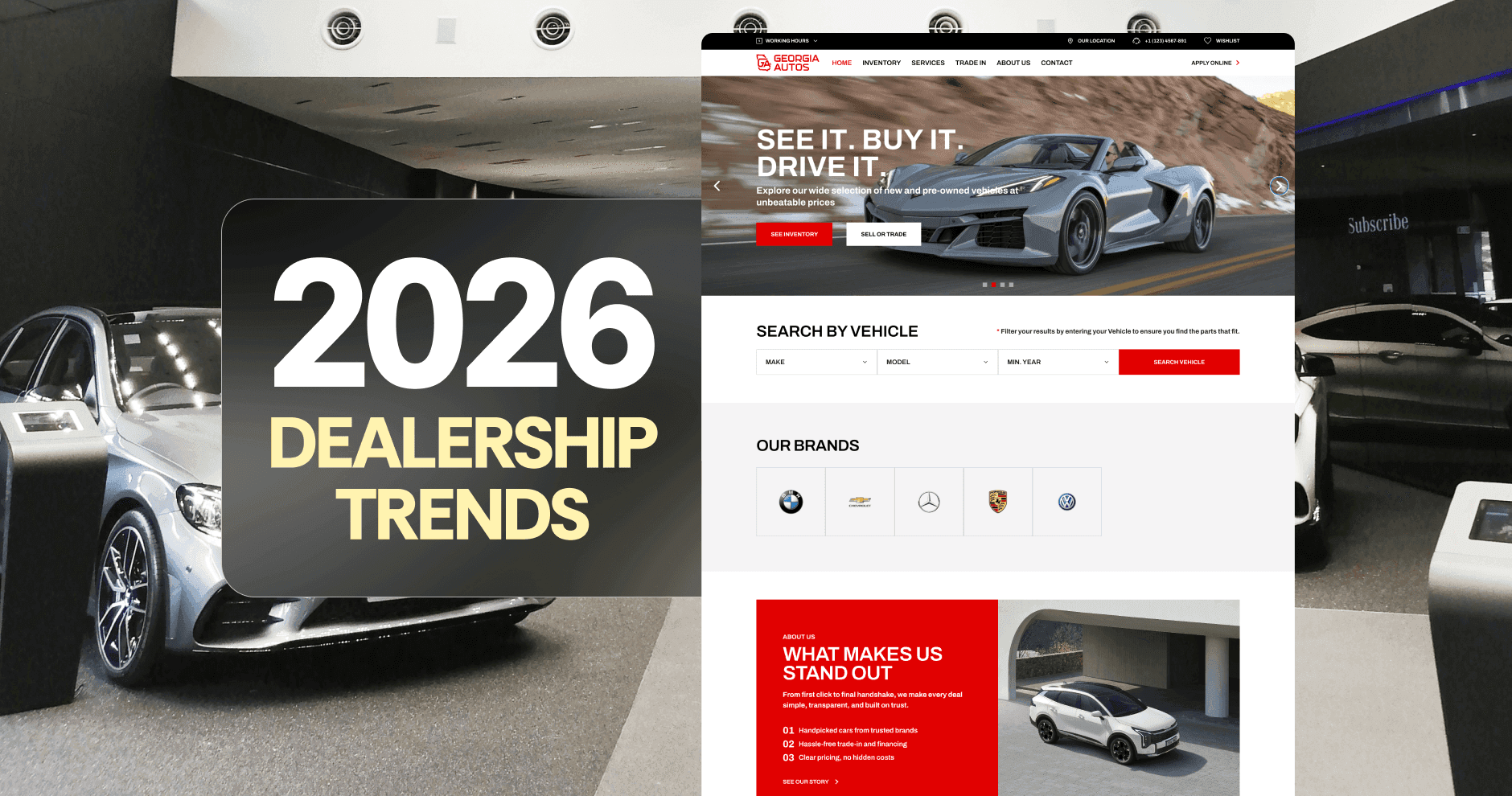
A clean inventory grid with simple filters helps shoppers narrow fast. Each vehicle page should load quickly and show real information without clutter.
Unique vehicle descriptions matter because Google needs context. AI-generated descriptions help solve this problem without creating extra work. They give each listing enough detail for search engines to understand why that car is relevant.
When inventory updates automatically through a DMS connection, your site stays fresh without manual effort. Fresh inventory is one of the strongest SEO signals you can have.
Buyer Intent Beats Blog Traffic Every Time
Many SEO companies push blogging because it looks productive. Weekly articles feel like progress, but they rarely bring in buyers. Someone shopping for a truck this weekend isn't reading car history articles. They want inventory, financing, trade-in numbers, and proof the dealer can be trusted. High-intent pages beat blogs because they answer the questions a buyer actually has: how trade-ins work, what financing options exist, and how to reach the dealership fast.
A website editor that lets you update text, images, and calls to action without code makes these pages easy to improve over time. You do not need complex layouts. Clear information converts.
Speed Is an SEO Feature
Design does not rank websites. Speed does.
Google tracks how quickly your pages load and how users behave once they arrive. If people leave immediately, rankings drop. If pages load fast and users interact, rankings improve.
Lightweight templates matter because they load faster on mobile. Most dealer traffic is mobile, and buyers scroll with one thumb while waiting in line or sitting on the couch.
A fast dealer site gets a few basics right:
- Large, easy-to-tap buttons
- Clickable phone numbers
- Quick-loading photos
Simple layouts convert better than flashy designs. Speed helps SEO and helps buyers act.
Check out SEO features that we include in our platform.
Leads and Tracking Are Part of SEO
Traffic alone does not pay the bills. SEO only works when you can see what is happening and respond quickly. That means knowing which pages bring visits and which ones bring leads.
A built-in analytics dashboard makes this simple. You can see total leads, inventory views, and which vehicles get the most attention without digging through reports.
Lead management matters just as much. When every form submission lives in one place, nothing gets missed. SEO traffic is only valuable if you follow up fast.
Local Language Builds Trust and Rankings
Google still relies on clear location signals.
Use real city names. Mention nearby towns. Reference the area naturally. This helps Google connect your site to local searches and helps buyers trust you.
Avoid vague language like “serving the community.” Be specific. Buyers want to feel like they are working with a local business, not a faceless operation.
Trust also depends on consistency. Your name, address, and phone number should match everywhere online. Inconsistencies confuse Google and lower rankings.
Pricing honesty matters too. If your website price does not match the lot price, reviews suffer. Reviews influence SEO more than most dealers realize.
Fresh Content Without Extra Work
SEO does not require constant publishing.
For dealers, freshness comes from new inventory, updated pricing, and the occasional seasonal banner or promotion, not a weekly blog post.
When your platform handles inventory syncing and description generation, SEO stays current without adding tasks for your team. This is how set-it-and-forget-it SEO actually works.
How to Measure What Matters
You do not need complicated SEO reports.
Watch three things:
- Google Map actions like calls and directions
- Inventory page engagement
- Lead volume from forms and calls
If those numbers grow, SEO is working. Rankings only matter when activity follows.
Seeing the Bottom Line
SEO for car dealers is not about chasing algorithms. It is about being the most helpful and visible dealer in your city.
A fast site. Clear inventory. Strong local signals. Easy contact options. That is exactly what DealerAssist is built to deliver from day one.
Instead of bolting SEO on later, DealerAssist starts with a foundation that works immediately. Your site launches fast. Your inventory is searchable and stays updated. Your location is clear. Your leads are tracked in one place. No developer. No long setup. No waiting weeks for things to “kick in.”
When SEO is built into the website from the start, results come faster and cost less. You are not paying to fix problems later. You are starting with a site designed to show up, load fast, and convert real buyers.
A dealer website should start generating leads the day it goes live. If SEO feels slow or disconnected from sales, the foundation is usually the issue.
Bring it back to your city. Focus on inventory and buyers. Let DealerAssist do the work in the background while you focus on selling cars.