Dealership Website Templates: How to Choose the Right Design for Your Lot
Your dealership website is often the first place a buyer interacts with your lot - and the template you choose determines how that experience feels. The right dealership website template puts your inventory front and center, captures leads without friction, and gives you direct control over updates without waiting on an agency or developer.
DealerAssist Team
March 30, 2026
If you're still paying an agency to manage your dealership website, ask yourself this. When was the last time a simple change didn't turn into a week-long email chain?
For a lot of independent dealers, the answer is "too long." That's why switching from an agency built site to a template based platform is one of the most practical moves you can make. The right template hands you back control, kills those back and forth delays, and puts your inventory front and center for buyers who are ready to shop right now.
But here's the thing. Not all templates are built the same.
The one you pick affects way more than how things look. It changes how customers move through your cars, whether leads actually find their way to you, and how many hours you burn just keeping the thing running. This guide cuts through the fluff and walks you through what actually matters. Your website should work as hard as your top salesperson.
Why Templates Have Replaced Custom Builds for Most Dealerships
Back when dealership websites were basically digital brochures, the agency model worked okay. But today's car shoppers want real-time inventory, forms that don't make them hunt for a submit button, and a site that actually works on their phone. The problem? Agencies still charge monthly retainers for tiny updates and a simple banner swap can sit in a developer's to-do list for a week. If you're running a weekend sale, that delay costs you real money.
That's where dealership website templates — like the ones built on DealerAssist — come in. They give you pre-designed layouts made specifically for car lots, so you can launch and manage the whole thing yourself. The template handles the design and tech backbone. You handle what actually sells cars: your inventory, your prices, and your brand.
Inventory Display Should Drive Your Template Decision
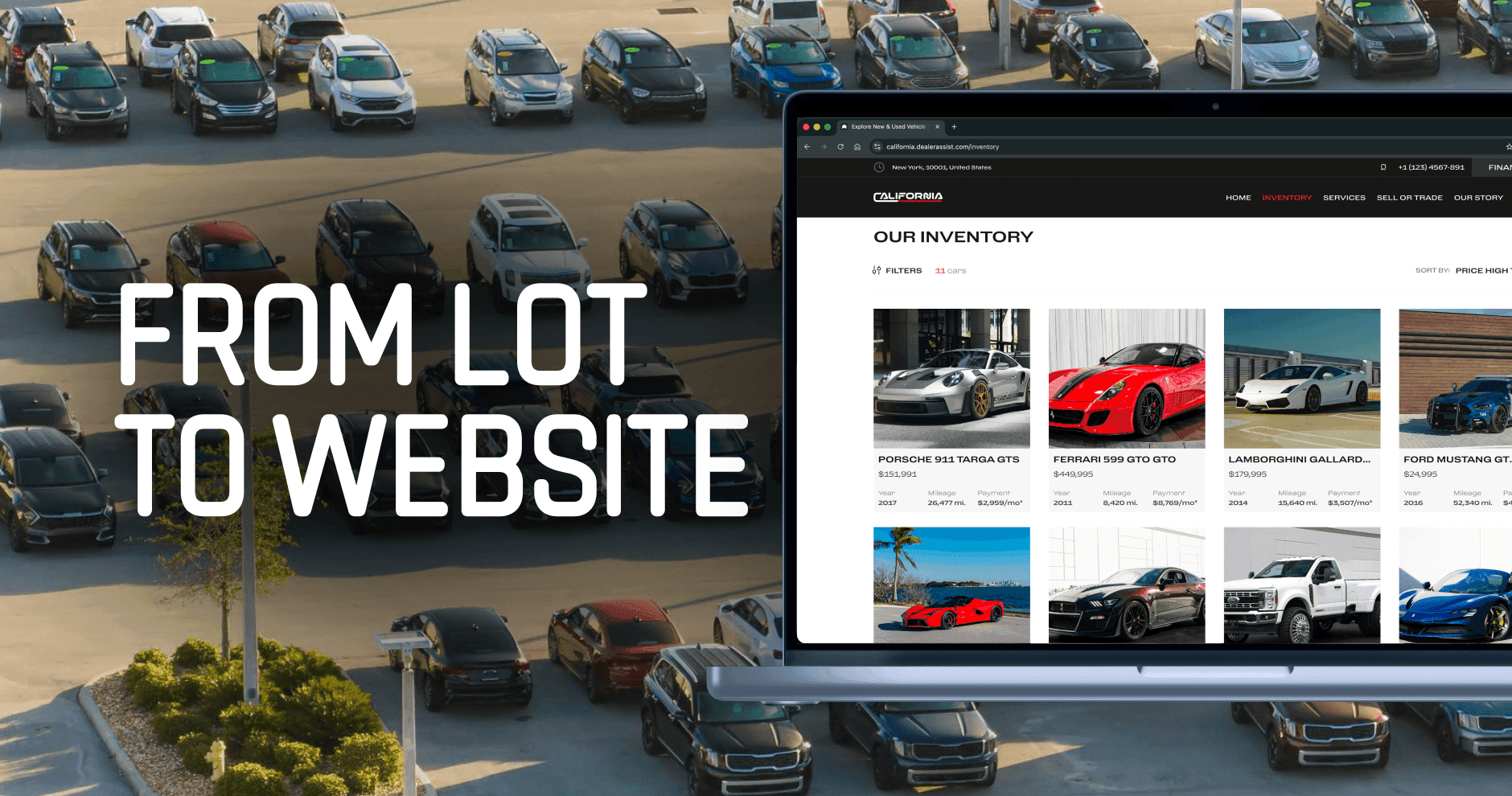
The MOST important feature of a dealership website is showing your inventory clearly and accurately. When looking at templates, the design is ultimately form and function. A great template will have inventory search and filtering front and center. What you don't want is a search function buried behind several clicks. The inventory page should have photos that allow the buyer to inspect the vehicle at a glance, a clearly named price (and financing options), the vehicle's production year and the mileage.
Equally important is how the template connects to your inventory feed. A platform with built-in inventory synchronization should ensure that any changes made to your DMS will reflect automatically and immediately. If you find yourself relying on third-party integrations to make changes, that means you're spending time doing double work and not selling cars.
Lead Capture Is Not Optional
A dealership website that looks good but fails to capture buyer interest is an expensive billboard. Every template you consider should include integrated lead capture at multiple touchpoints: inquiry buttons on every vehicle listing, a general contact form, and ideally a trade-in or sell-your-car submission form that lets private sellers reach your acquisitions team.
Here's the truth: plenty of templates look fine but fall apart the second someone submits their info. What really separates a so-so template from a great one is what happens next. So before you decide, ask yourself a few things:
- Where do inquiries go? A central dashboard beats a shared email inbox every time.
- How fast does your team get notified? The quicker you reply, the more cars you sell.
- Does the platform keep a history of every conversation, or does each lead just disappear after one reply?
If the answer to any of these is unclear, the template may not be built with serious lead management in mind.
Mobile Experience Is a Dealbreaker
The majority of vehicle searches now happen on a phone. If your dealership website template does not deliver a clean, fast mobile experience, you are losing buyers before they ever reach your lot.
Responsive design is a baseline requirement, but true mobile optimization goes further. On a phone screen, the inventory search should be easy to use with one hand, photos should load quickly without pixelation, and the call-to-action buttons for calling the dealership or submitting an inquiry should be visible without scrolling.
Test any template on an actual phone before committing. Navigate through the inventory, submit a test lead, and browse the about page. If any of those tasks feel slow or awkward, your customers will notice the same friction.
Branding Flexibility Without the Complexity
Your website should feel like your actual lot, not like some generic software dashboard. Pick a template that lets you slap your logo on there, match your brand colors, and tweak your messaging all without touching a single line of code or paying a designer. You'll want something where updating a homepage banner, swapping out a promotion, or rearranging sections is as easy as dragging and dropping.
But here's the catch: more options aren't always better. Some templates come with design editors so complicated that changing one banner burns an entire afternoon. If you're running weekly specials, that's a nightmare. What you really want is a template that handles the big structural stuff for you but makes the little daily edits quick and painless.
Platforms like DealerAssist have the perfect balance between polished, car-dealer-friendly templates with customization tools that put you in control without making your head spin.
Analytics and Performance Visibility
A dealership website functions as a primary sales mechanism, requiring consistent performance measurement. Templates equipped with built-in marketing analytics provide direct visibility into traffic sources, vehicle page engagement, and lead conversion rates without necessitating external tracking configurations. This integrated data enables dealerships to identify high-interest vehicles, measure promotional effectiveness, and analyze visitor origins. Consequently, management can strategically optimize homepage inventory and reallocate expenditures away from underperforming advertising campaigns.
For dealerships transitioning from a third-party agency model, native platform analytics grant direct and immediate access to operational metrics. This direct visibility allows internal teams to independently identify market trends, adjust featured inventory allocations, and execute data-driven decisions regarding marketing budgets.
The absence of integrated analytics, or the requirement of external tools to track fundamental metrics, represents a significant operational deficiency when evaluating website template platforms.
A Practical Evaluation Checklist
When comparing dealership website templates side by side, these criteria will help you separate the contenders from the noise:
- Is the template built specifically for automotive retail, or adapted from a generic business design?
- How quickly can you go from signup to a live website?
- Is inventory synchronization automatic, or does it require manual uploads?
- Does the platform include a lead management dashboard, or do inquiries arrive as unstructured emails?
- Can you update banners, promotions, and content yourself, or do changes require a support ticket?
These operational details often matter more than visual polish when it comes to running a dealership website efficiently over the long term.
Choose a Template That Works as Hard as You Do
The right dealership website template is not the one with the flashiest design. It is the one that displays your inventory accurately, captures leads reliably, works on every device, and lets you make updates without waiting on someone else. For dealers moving away from agency-managed sites, this shift represents a meaningful gain in control, speed, and cost efficiency.
DealerAssist was built for exactly this transition. With dealership-specific templates, automatic inventory synchronization, integrated lead capture, and built-in analytics, the platform gives you everything you need to run a professional website without the overhead of a custom build.
Book a demo to see how DealerAssist can work for your lot.